
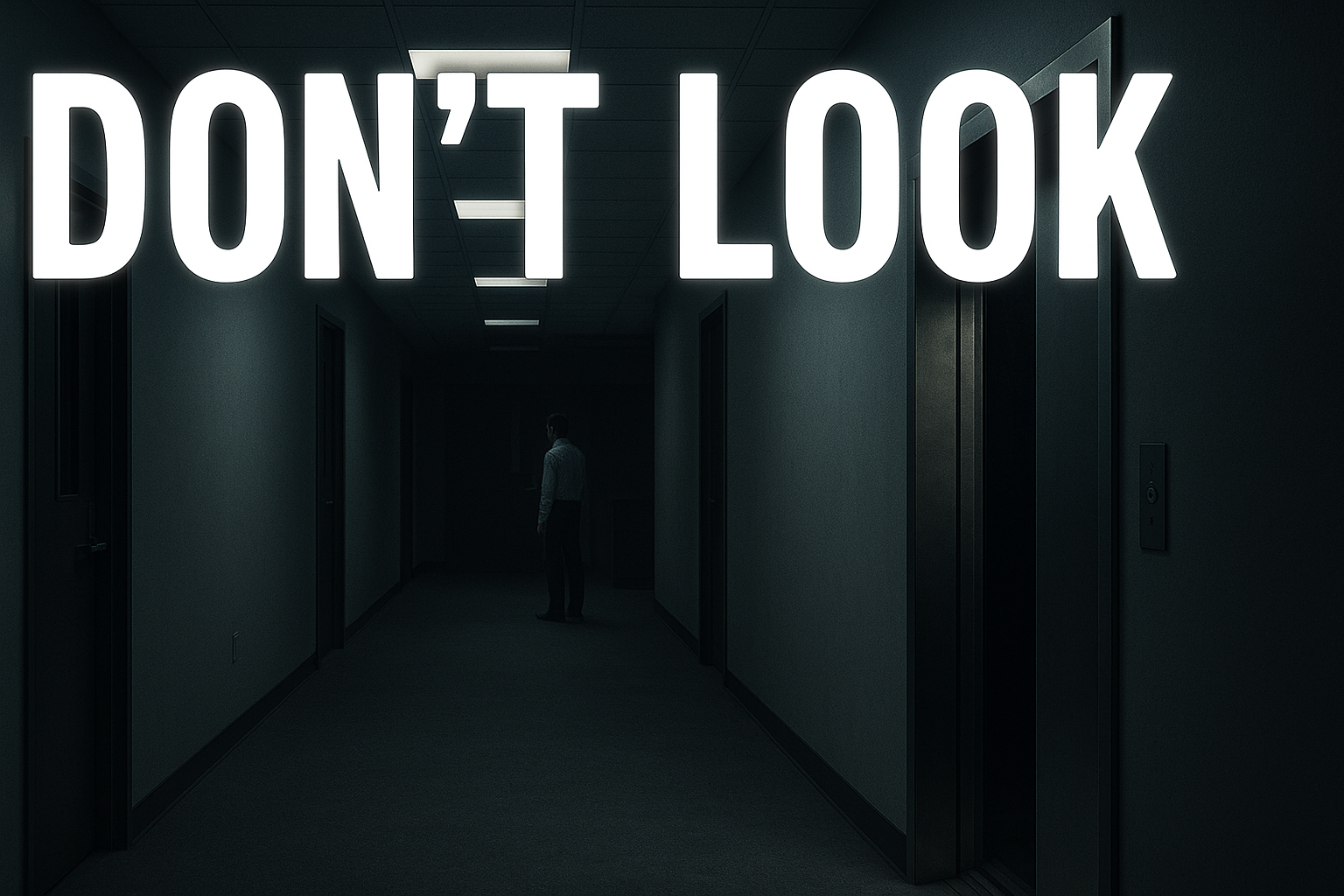
This story was sent in by jonahlate from Boise, Idaho.
For a couple of years in my mid‑twenties, I worked a graveyard shift cleaning office floors in downtown Boise. It wasn’t glamorous, but it paid well enough, and the schedule suited me. I’ve always been more alert at night, and there was something almost peaceful about pushing a floor machine down long, empty hallways while the rest of the city slept. Most nights I’d clock out right around 1 AM, when the building felt like a giant concrete shell with all the life drained out of it.
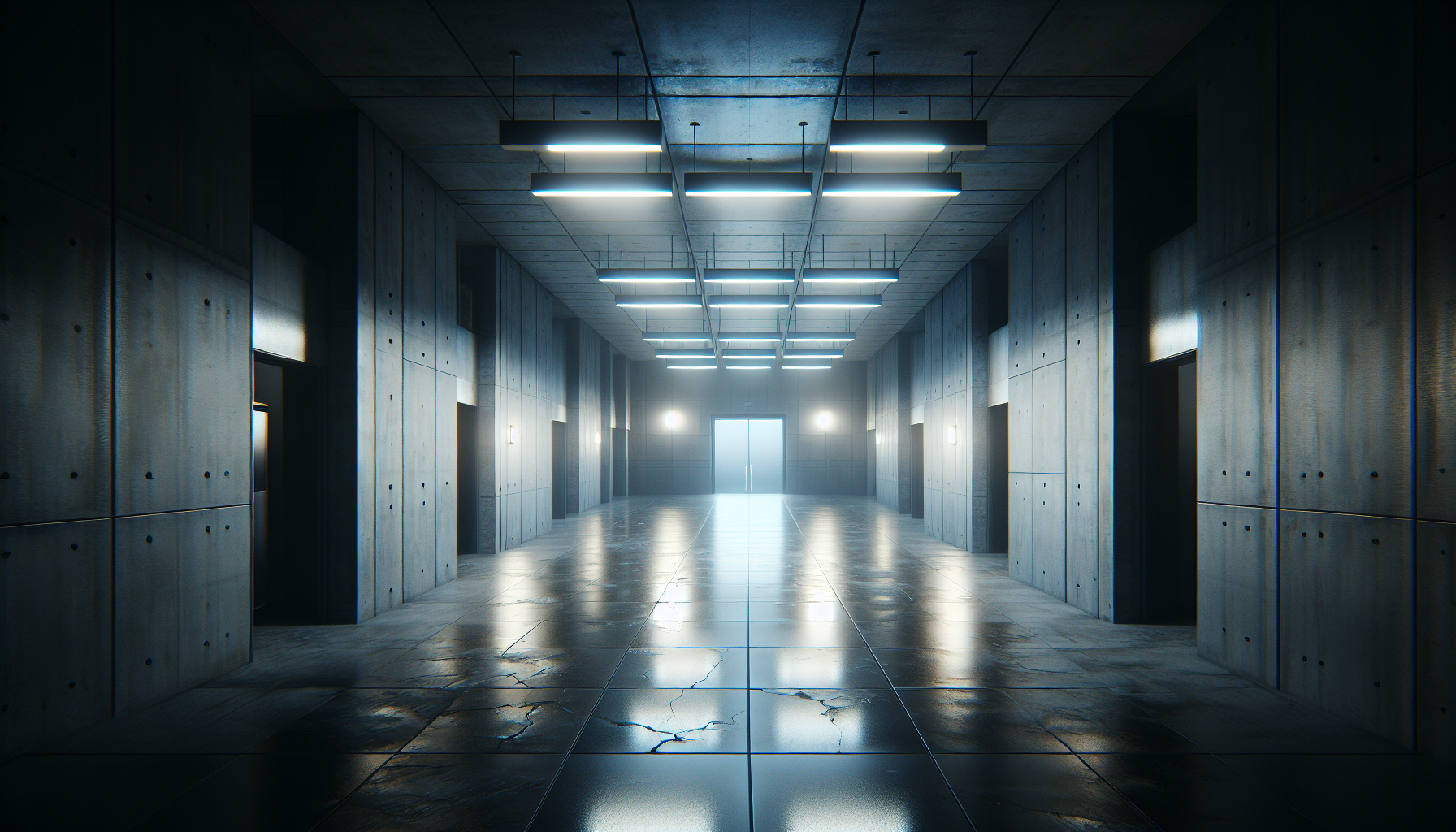
The building I worked in was eight floors, with mostly accounting firms and small tech startups. By midnight, everyone was long gone except maybe one security guard downstairs who usually watched old action movies on his phone. The upper floors, especially seven and eight, had this crisp, overly filtered HVAC hum that made it feel like being inside an unplugged refrigerator. I was used to that kind of quiet, but every now and then it would play tricks on my nerves. A clang from a settling duct, a copier warming itself for no reason—just enough noise to make you glance over your shoulder.
That night had already been slow and tiring. I’d done two extra floors because a coworker called out sick, so by the time I finished the eighth floor, I just wanted to go home. My eyes were still a little blurry from the floor cleaner fumes, and my shoulders were stiff. It was about 1:10 AM. I remember checking because I was already calculating how long it would take me to get home and shower before crashing.
I packed up my cart, locked the supply cabinet, and walked over to the elevator. The hallway lights were on motion sensors, and they’d dimmed while I was cleaning. When I stepped toward the elevator, they flicked back to full brightness, and that sudden jump of light made everything feel overly sharp and exposed.
I hit the button. The elevator dinged right away, which told me it had been sitting on the eighth floor for a while. When the doors slid open, the lights inside weren’t fully on. They flickered—not violently, just this weak, stuttering pulse like they were trying to warm up. I’d seen that before in older elevators, so at first I wasn’t concerned. I stepped inside, pulled my backpack off one shoulder, and hit the lobby button.
The doors started to close, got about an inch from touching, then reversed direction so gently it was almost like they were changing their mind. I glanced down at the floor, expecting maybe a stray piece of mop string or something had drifted into the sensor. Nothing. The threshold was spotless.
I tried again. The doors moved in, same slow slide, then stopped just short again and opened back up. I waved my hand through the sensor. Nothing changed.
At that point I was annoyed more than anything. Elevators in older buildings can be temperamental. Dust on the sensor, wiring issues, whatever. But something about the way the doors kept stopping at the exact same inch—like it was purposeful—made a little unease creep in.
I stepped out and looked toward the sensor track to see if something was wedged inside it. Nothing obvious. That was when something flickered at the edge of my vision. A small, slow movement from down the hall. The far corner where the hall curved left toward the conference rooms.
I turned my head, expecting maybe a janitorial cart someone had left out. Instead, I saw the heel of a shoe—just the back of it—sliding out of sight behind the wall. Not fast. Not startled. More like whoever it belonged to was pulling their foot back at a deliberate, almost careful pace.
My first thought was that it was a security guard messing with me. But the guard on duty that night was a heavyset guy who never came upstairs unless he had to. And the shoe I saw looked like a dress shoe. Black, shiny, like what people wear to meetings. Nobody dressed like that was still supposed to be there.
I stood completely still, listening.
I couldn’t hear footsteps. Couldn’t hear breathing. All I heard was the air system, the same steady hum as always.
Then something clicked: the elevator doors weren’t malfunctioning. Someone around that corner was holding the outer “door open” button. On those older elevators, the outside panel had a rubber-covered button you could press to keep the doors from closing while you moved something in or out.
It didn’t make sense. There was nothing in the hall. No cleaning carts besides mine. No delivery bins. No reason for someone to be hiding around the corner and holding that button.
I backed away from the elevator, trying not to make noise. My brain was already jumping through explanations. Maybe someone stayed late and didn’t want to be seen. Maybe it was just a guy on the phone who ducked around the corner. Maybe he didn’t even realize he was pressing the outer button.
But none of those explanations fit with the way that shoe disappeared—slow, careful, like whoever it was didn’t want me to know they were there.
I thought about calling out, asking if someone needed the elevator. But something in my gut tightened at the idea. Conversations at 1 AM in empty buildings rarely lead anywhere good.
I hesitated one more second, then turned toward the stairwell. The metal crash bar felt ice cold under my hand. I pushed it open and slipped inside.
As the door closed behind me, I heard the faintest clunk from the hallway—like someone shifting their weight. Not a footstep exactly. More like a shoe tapping once against the floor.
I didn’t wait to decipher it. I hurried down the stairs, forcing myself not to run but unable to stop glancing through the gaps in the railing as I descended. Every sound echoed: my breathing, the slap of my soles on concrete, the mechanical groan of the building settling.
When I reached the lobby, the security guard looked up from his phone. He didn’t notice anything off about me, which told me I was holding everything in pretty well.
But I didn’t mention what happened. Something about saying it out loud felt like it would make it worse, like I didn’t want to admit that for those few moments on the eighth floor, I wasn’t alone.
I don’t know who was up there. I don’t know why they were hiding, or why they were holding the elevator door. I only know that whoever it was didn’t want to be seen—and didn’t want me to leave that floor just yet.
After that night, I stopped using elevators entirely when I worked late. Eight flights of stairs every shift was better than wondering who might be waiting just out of sight, holding a button, trying to keep the doors from closing.
Even now, years later, if I’m in a building after dark and an elevator door hesitates for even a second, I take the stairs without thinking. And I never, ever look too long down an empty hallway.