
Story 1
This story was sent in by Aaron from Cleveland, Ohio.
I used to work evenings at a little print shop on the west side, one of those places stuck between a laundromat and a chiropractor’s office in a strip mall that always felt a little too empty after ten at night. My shift usually ran late, and on busy days I wouldn’t lock up until around 12:30 in the morning. By that point I was tired in that dull, buzzing way where everything feels slowed down. I’d be thinking more about what leftovers I had at home than anything happening around me.
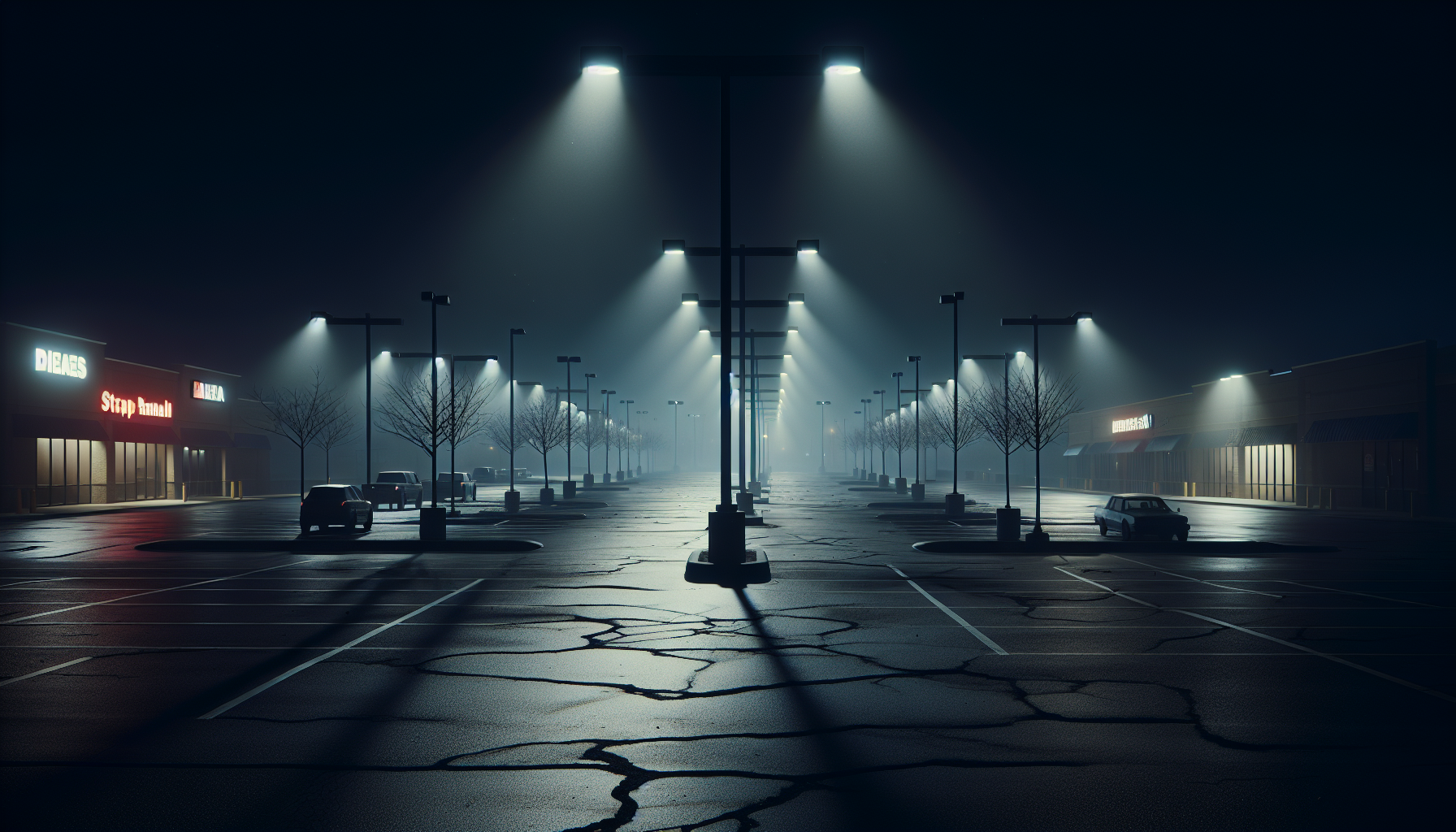
It was early spring, still cold enough for my breath to fog when I walked outside. The parking lot wasn’t big—maybe twenty spaces—but only a couple of the lights worked. The rest flickered or stayed dead, leaving long stretches of darkness where the asphalt just disappeared. I always parked under one of the working lights, partly out of habit and partly because I’d had my catalytic converter stolen the year before and wasn’t eager to repeat the experience.
That night, I stepped out with my backpack over one shoulder and my keys already in my hand. Everything seemed normal at first. The laundromat was dark. The chiropractor’s office was dark. My car sat where I left it, a little silver hatchback under a patch of yellowish light.
But off to the far corner, well outside the lit area, I noticed an old sedan parked by itself. It wasn’t unusual for cars to be left overnight—the laundromat had a few regulars who’d crash in their vehicles—but something about this one made me slow down.
The driver’s door was cracked open just an inch. Not enough to swing on its own, but just wide enough to keep it from clicking shut.
It was such a specific detail that my brain registered it before I really thought about it. Like someone had opened the door to get out, then changed their mind at the last second.
I told myself it was nothing. Maybe the latch was broken. Maybe someone had gone inside one of the closed shops for some reason. Maybe I was just tired and noticing things that didn’t matter.
I started walking across the lot, my boots making sharp little taps on the pavement.
Then the door creaked. Almost silently, but loud enough in the stillness that I froze mid-step.
It eased open another few inches.
A man stepped halfway out.
He didn’t straighten all the way; he stayed hunched, head low, like he’d been curled up inside and was unfolding himself just enough to look around. His face was shadowed, but I could make out the shape of him—thin, maybe late thirties, wearing a jacket that looked too bulky for his frame.
He didn’t say a word. He just watched me.
One foot came out onto the pavement. He shifted his weight like he was about to move, maybe stand up fully, maybe take a step in my direction. I couldn’t tell. It was one of those moments where your brain jumps between explanations—maybe he needs help, maybe he’s confused, maybe he’s just another person killing time in their car.
But the way he leaned forward, just slightly, reminded me of someone poised at the start of a sprint.
I forced myself to keep walking, trying not to speed up but definitely not moving casually anymore. My palms were sweating around my keys. I kept glancing over without fully turning my head.
He stayed halfway out of the car, still staring. Still hunched.
When I reached my hatchback, the feeling got sharper, like pressure building behind my ribs. I unlocked the door with a beep that sounded way too loud, and the moment it chirped, the man suddenly moved.
He ducked back into his sedan and pulled the door shut with a soft but deliberate thud.
For a second the lot was silent again.
Then the engine of the sedan rumbled to life.
But the headlights didn’t turn on.
I got into my car fast and locked the doors. My hands were shaking just enough that I almost dropped the keys. When I started backing out, I saw movement in my rearview mirror—the sedan creeping forward in the dark, matching my slow reverse like we were tethered together.
I tried to rationalize it. Maybe he was leaving at the same time. Maybe he was nervous too. Maybe I’d made him uncomfortable by staring.
But every time I adjusted my angle, he adjusted his. When I braked, he braked. When I inched back again, so did he.
The headlights staying off was the part that finally shut down the whole internal debate. Nobody pulls out of a dark lot after midnight with their lights off unless they’re trying not to be seen.
I felt this jolt of panic, sharp and cold. Instinct took over. Instead of backing out the rest of the way, I cranked the wheel hard and pulled forward, cutting across two empty spots toward the exit lane.
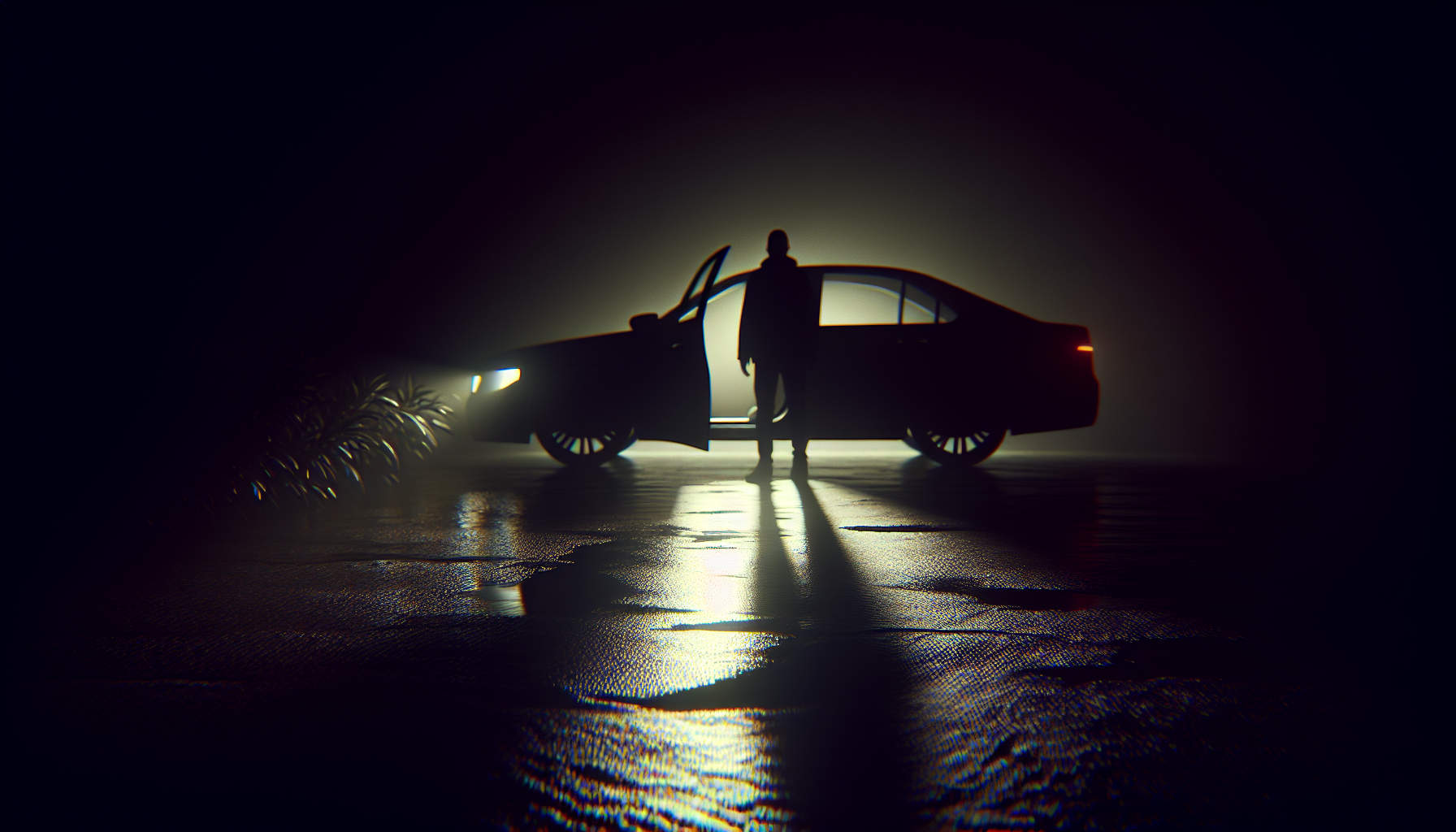
The sedan kept coming for a few feet, like he was going to follow, then stopped abruptly. No flash of headlights, no attempt to turn. Just stillness.
I didn’t wait to see anything else. I drove straight out of the lot and didn’t slow down until I hit the main road, the one with streetlights and cars still passing even that late. Only then did I check my mirrors.
Nothing behind me.
I kept expecting to see the sedan slipping in from a side street, but it never happened. I drove home with my shoulders tight and my jaw locked, and even after I parked in my apartment’s lot, I sat there for a full minute making sure no headlights appeared.
I didn’t call the police. I didn’t have a plate, or a description beyond a dark sedan and a man I barely saw. It felt pointless.
But something changed for me that night.
Ever since, I can’t cross a dark parking lot without scanning for cracked doors or cars sitting too quietly in the shadows. I check for movement behind windshields. I look for silhouettes that shouldn’t be there.
It’s a habit I can’t break, because now I know how easy it is to walk past someone who’s been waiting in the dark, door cracked open just an inch, listening for footsteps like yours.
Story 2
This story was sent in by Melissa T. from Flagstaff, Arizona.
It happened a couple of years ago, back when I was working evenings at a small clothing store just outside downtown Flagstaff. We weren’t a busy place, especially on weeknights, and by late fall the nights got chilly enough that foot traffic dropped off almost entirely after ten. I didn’t mind closing shifts, though. I liked the quiet, and I liked being able to control how the store looked before locking up. It gave me a sense of routine at a time in my life when I didn’t have much of one.
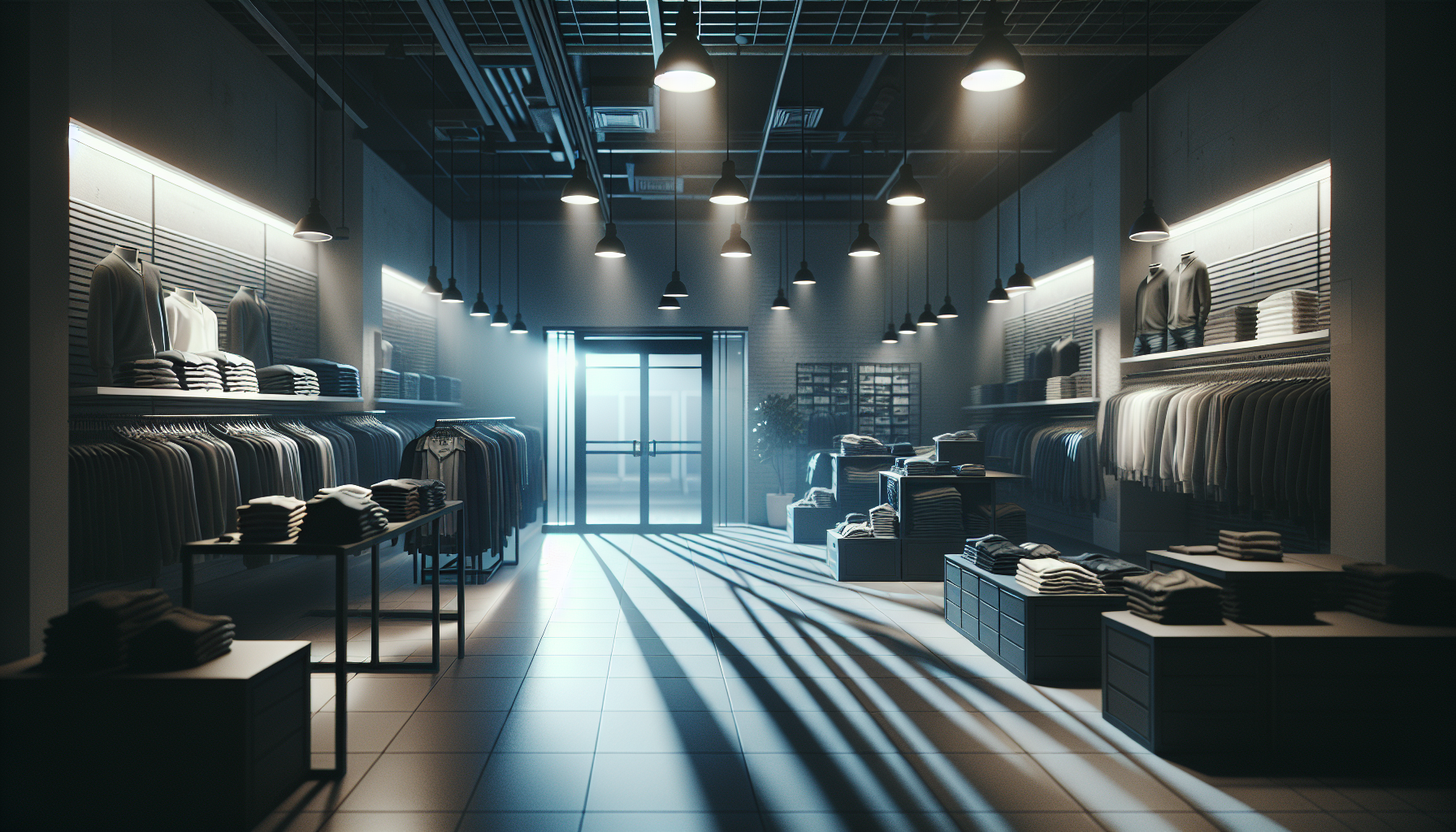
That night, I remember feeling more drained than usual. I think it was around 11:45 p.m. I had been on my feet since the afternoon, and by the time the last customer wandered out, my legs were aching in that dull, familiar way they do after a long retail day. I locked the front doors, did the usual sweep along the floor sets, folded a few sweaters that people had just tossed back onto tables, and did that quick glance around you get used to—lights, displays, dressing rooms, all empty.
The store felt calm. Too calm, maybe. You notice things more sharply when it’s late and you’re alone. The HVAC clunks, the hum of the fluorescent lights, even your own footsteps start to feel louder. But it was just part of closing, and I’d heard it all a hundred times.
I headed to the stockroom to finish the last bit of inventory before I could shut everything down and go home. The stockroom light has this faint buzz to it, like a dying bee trapped in a jar. I flicked it on, grabbed the clipboard from the shelf, and started checking boxes one by one.
That’s when I noticed something off.
Right in the middle of the stockroom floor was a half-unpacked box. Just sitting there. Not on the table. Not near the wall. Dead center, like someone had set it down intentionally. The lid was peeled back and one of the plastic-wrapped shirts inside was halfway pulled out.
I remember standing there for a good couple of seconds, just staring at it. I hadn’t touched that shipment yet. I knew exactly which boxes I’d opened earlier, and this wasn’t one of them. It wasn’t even in the same section.
My brain immediately tried to patch together logical explanations. Maybe I forgot I moved it. Maybe my manager left it earlier during her shift. Maybe one of the customers somehow slipped into the backroom when I wasn’t looking. But that last thought didn’t even make sense—the door chimes would’ve gone off. And I always kept that door propped closed.
Still, I tried not to freak myself out. I bent down to push the box out of the walkway.
That’s when I heard it.
A soft shuffle. Like rubber soles dragging lightly across linoleum.
It came from behind one of the tall rolling racks near the corner of the room. The kind with jackets hanging on both sides. I froze in this awkward crouch with my hand on the cardboard, and for a moment I held my breath, wondering if I’d imagined it.
Then I heard something worse.
Breathing.
Slow. Steady. Not panicked, not winded. Just someone breathing in a controlled way, like they were trying not to be heard but weren’t doing a great job of it.
I didn’t stand up right away. I stayed crouched, staring at that rack, trying to listen past the thudding in my ears. The first thought that hit me was that a customer had hidden in the store before closing, maybe trying to shoplift. But that didn’t line up, either. The place had been empty for at least twenty minutes before I locked up. And if someone was hiding, why come into the stockroom?
I slowly straightened up and took one tiny step backward. My shoes squeaked on the floor, and I heard the breathing pause for half a second. Then the rack shifted just a little. Not enough to tip or make noise—just a slight movement, like someone leaning their weight against it.
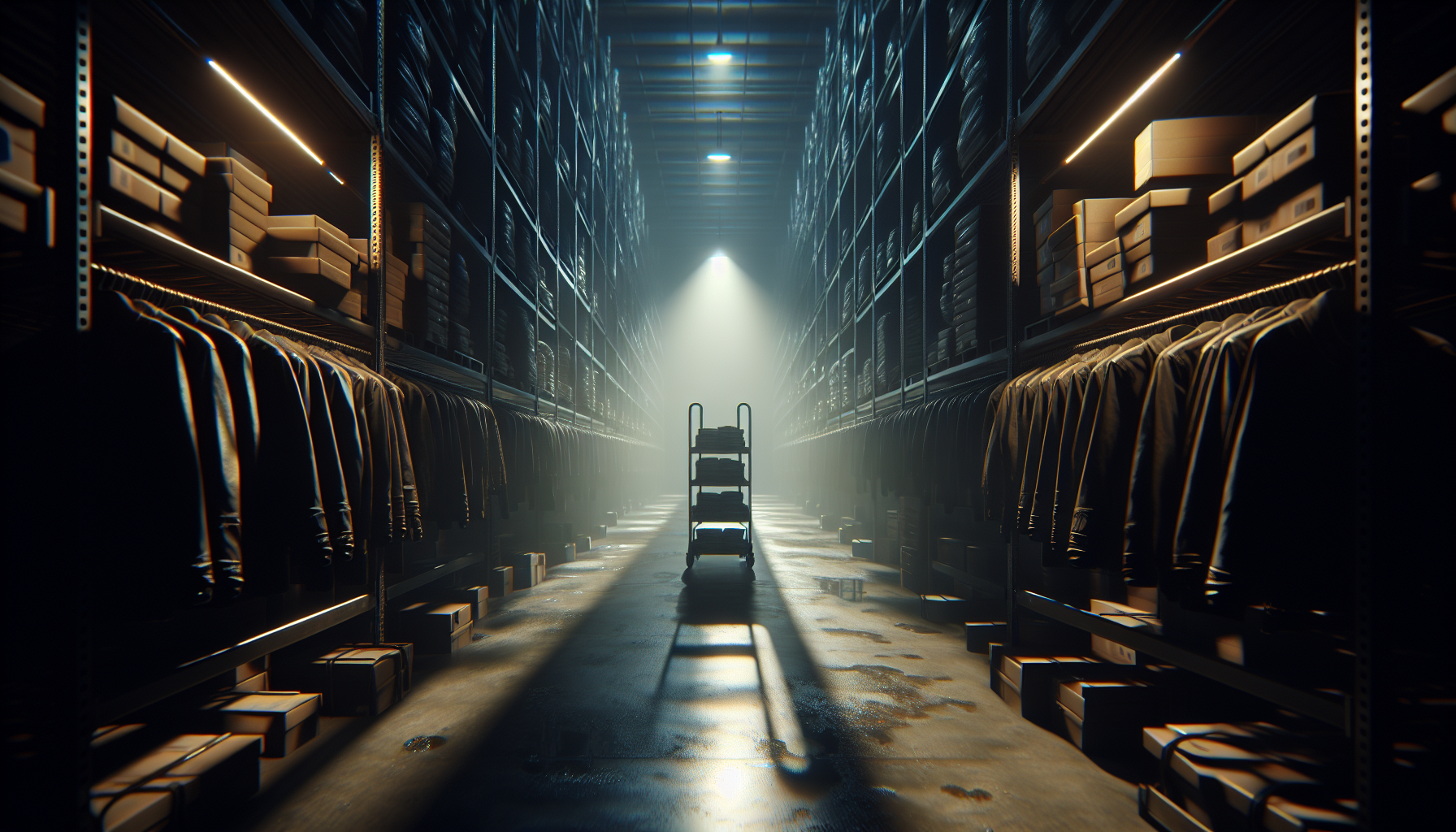
That was the moment every hair on my arms lifted.
I kept backing up, keeping my eyes locked on that corner. I didn’t want to turn my back. I didn’t want to speak. I didn’t even want to swallow because I was scared the sound would carry.
My hand fumbled behind me for the stockroom door. When my fingers found the edge, I slipped through it and eased it shut, trying not to let it slam. The second the latch clicked, I bolted. Full sprint through the sales floor toward the front doors.
I didn’t look back. I didn’t grab my purse. I didn’t even hit the lights.
I just unlocked the door with shaking hands, shoved it open, and burst into the parking lot where the overhead lamps made everything feel brighter and safer than it actually was.
I stood there for a long minute, trying to calm down, listening for anything inside the store. The automatic lights near the front windows stayed still. Nothing moved. I called 911 from outside, feeling a little embarrassed but too shaken to care.
When the officers finally arrived, they searched the store top to bottom. Stockroom, bathroom, racks, even the crawlspace above the ceiling tiles. They found nothing. They asked me over and over if I might’ve left the back door unlocked or if maybe a coworker had come in earlier. But the box in the middle of the room stuck with me. It wasn’t something that would shift on its own. Somebody had put it there.
They didn’t find footprints or handprints or anything useful. They said it was possible someone had slipped out while I was running to the front, but they couldn’t be sure.
I didn’t sleep much that night. For weeks, every little noise in the store made my chest tighten. I kept imagining that breathing, that slow, controlled pace, just a few feet away from me with only a rack of jackets between us.
I’m still at the same job, but I don’t close alone anymore. And even when someone’s with me, I always check behind every rack before shutting off the lights. I never leave boxes in the middle of the stockroom, either.
And some nights, when I’m locking up and the place is dead silent, I catch myself listening—wondering if I’ll ever hear that slow breathing again, waiting in the dark.
Story 3
This story was sent in by jonahlate from Boise, Idaho.
For a couple of years in my mid‑twenties, I worked a graveyard shift cleaning office floors in downtown Boise. It wasn’t glamorous, but it paid well enough, and the schedule suited me. I’ve always been more alert at night, and there was something almost peaceful about pushing a floor machine down long, empty hallways while the rest of the city slept. Most nights I’d clock out right around 1 AM, when the building felt like a giant concrete shell with all the life drained out of it.
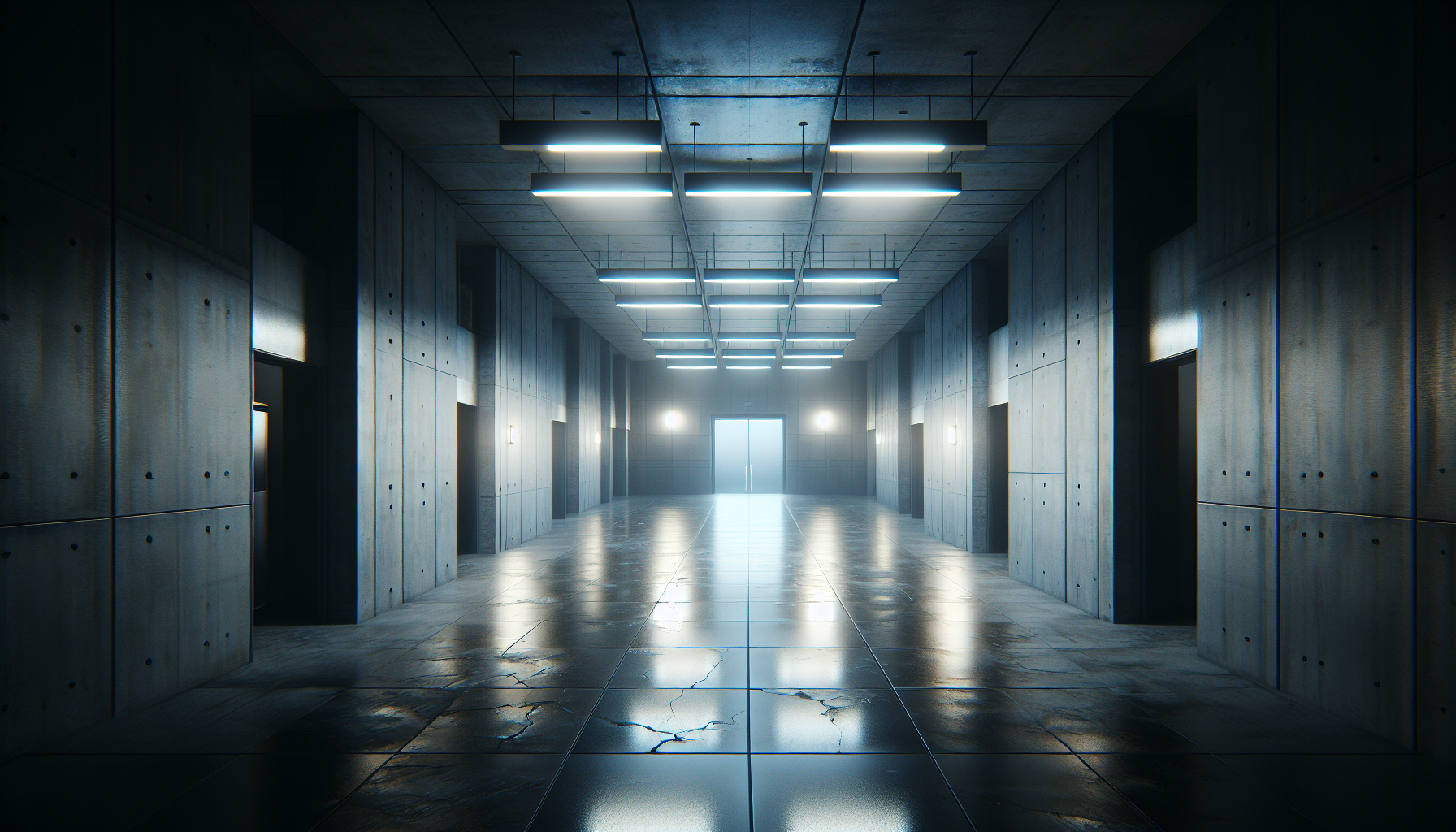
The building I worked in was eight floors, with mostly accounting firms and small tech startups. By midnight, everyone was long gone except maybe one security guard downstairs who usually watched old action movies on his phone. The upper floors, especially seven and eight, had this crisp, overly filtered HVAC hum that made it feel like being inside an unplugged refrigerator. I was used to that kind of quiet, but every now and then it would play tricks on my nerves. A clang from a settling duct, a copier warming itself for no reason—just enough noise to make you glance over your shoulder.
That night had already been slow and tiring. I’d done two extra floors because a coworker called out sick, so by the time I finished the eighth floor, I just wanted to go home. My eyes were still a little blurry from the floor cleaner fumes, and my shoulders were stiff. It was about 1:10 AM. I remember checking because I was already calculating how long it would take me to get home and shower before crashing.
I packed up my cart, locked the supply cabinet, and walked over to the elevator. The hallway lights were on motion sensors, and they’d dimmed while I was cleaning. When I stepped toward the elevator, they flicked back to full brightness, and that sudden jump of light made everything feel overly sharp and exposed.
I hit the button. The elevator dinged right away, which told me it had been sitting on the eighth floor for a while. When the doors slid open, the lights inside weren’t fully on. They flickered—not violently, just this weak, stuttering pulse like they were trying to warm up. I’d seen that before in older elevators, so at first I wasn’t concerned. I stepped inside, pulled my backpack off one shoulder, and hit the lobby button.
The doors started to close, got about an inch from touching, then reversed direction so gently it was almost like they were changing their mind. I glanced down at the floor, expecting maybe a stray piece of mop string or something had drifted into the sensor. Nothing. The threshold was spotless.
I tried again. The doors moved in, same slow slide, then stopped just short again and opened back up. I waved my hand through the sensor. Nothing changed.
At that point I was annoyed more than anything. Elevators in older buildings can be temperamental. Dust on the sensor, wiring issues, whatever. But something about the way the doors kept stopping at the exact same inch—like it was purposeful—made a little unease creep in.
I stepped out and looked toward the sensor track to see if something was wedged inside it. Nothing obvious. That was when something flickered at the edge of my vision. A small, slow movement from down the hall. The far corner where the hall curved left toward the conference rooms.
I turned my head, expecting maybe a janitorial cart someone had left out. Instead, I saw the heel of a shoe—just the back of it—sliding out of sight behind the wall. Not fast. Not startled. More like whoever it belonged to was pulling their foot back at a deliberate, almost careful pace.
My first thought was that it was a security guard messing with me. But the guard on duty that night was a heavyset guy who never came upstairs unless he had to. And the shoe I saw looked like a dress shoe. Black, shiny, like what people wear to meetings. Nobody dressed like that was still supposed to be there.
I stood completely still, listening.
I couldn’t hear footsteps. Couldn’t hear breathing. All I heard was the air system, the same steady hum as always.
Then something clicked: the elevator doors weren’t malfunctioning. Someone around that corner was holding the outer “door open” button. On those older elevators, the outside panel had a rubber-covered button you could press to keep the doors from closing while you moved something in or out.
It didn’t make sense. There was nothing in the hall. No cleaning carts besides mine. No delivery bins. No reason for someone to be hiding around the corner and holding that button.
I backed away from the elevator, trying not to make noise. My brain was already jumping through explanations. Maybe someone stayed late and didn’t want to be seen. Maybe it was just a guy on the phone who ducked around the corner. Maybe he didn’t even realize he was pressing the outer button.
But none of those explanations fit with the way that shoe disappeared—slow, careful, like whoever it was didn’t want me to know they were there.
I thought about calling out, asking if someone needed the elevator. But something in my gut tightened at the idea. Conversations at 1 AM in empty buildings rarely lead anywhere good.
I hesitated one more second, then turned toward the stairwell. The metal crash bar felt ice cold under my hand. I pushed it open and slipped inside.
As the door closed behind me, I heard the faintest clunk from the hallway—like someone shifting their weight. Not a footstep exactly. More like a shoe tapping once against the floor.
I didn’t wait to decipher it. I hurried down the stairs, forcing myself not to run but unable to stop glancing through the gaps in the railing as I descended. Every sound echoed: my breathing, the slap of my soles on concrete, the mechanical groan of the building settling.
When I reached the lobby, the security guard looked up from his phone. He didn’t notice anything off about me, which told me I was holding everything in pretty well.
But I didn’t mention what happened. Something about saying it out loud felt like it would make it worse, like I didn’t want to admit that for those few moments on the eighth floor, I wasn’t alone.
I don’t know who was up there. I don’t know why they were hiding, or why they were holding the elevator door. I only know that whoever it was didn’t want to be seen—and didn’t want me to leave that floor just yet.
After that night, I stopped using elevators entirely when I worked late. Eight flights of stairs every shift was better than wondering who might be waiting just out of sight, holding a button, trying to keep the doors from closing.
Even now, years later, if I’m in a building after dark and an elevator door hesitates for even a second, I take the stairs without thinking. And I never, ever look too long down an empty hallway.
Story 4
This story was sent in by Nora from Bend, Oregon.
I used to work evenings at a small café on the west side of Bend, the kind of place that pulled in a steady flow of skiers in winter and campers in summer. My shifts usually ran late, and on weeknights I was the one responsible for locking up. I didn’t mind the quiet. I’m one of those people who stays calmer when I’m doing something repetitive, like wiping counters or stacking chairs. Closing up at midnight became a routine I barely thought about.
The café had these huge front windows that looked out onto a small stretch of sidewalk and a couple of street lamps. At night, those windows acted like mirrors. I always saved them for last because once the lights inside were dimmed and the reflections got strong, it felt like I was watching myself more than the street.
It was early spring the night this happened, somewhere around 12:15 a.m. I remember because I’d checked the clock, hoping I could still catch a late-night grocery run on my way home. The café was warm, but the air outside looked cold enough to frost over the patio chairs. The street was completely empty.
I was cleaning one of the front windows, using long strokes of the squeegee. That’s when I noticed something shift in the reflection behind me.
At first it looked like a tall, hooded shape standing near the back of the café. I thought maybe it was just the way my shadow stretched across the glass, but when I leaned a little to the side, the shape didn’t move with me. It stayed perfectly still.
I turned around fast, expecting to see someone standing there, but the café was empty. Just chairs stacked on tables, the espresso machine humming softly, the exit sign glowing red over the main door.
When I looked back at the window, I saw something that made my stomach tighten. My reflection wasn’t matching me. I’d already turned around fully, but in the glass, it was like I was only halfway through the movement—like the reflection was catching up a beat late. As it completed the turn, I didn’t see the hooded shape anymore, but the delay was so wrong it sent a jolt through me.
My first thought was that I was overtired and just misreading it. I told myself it could’ve been the lighting or the glare or whatever else made sense. But a weight settled in my chest anyway, that feeling you get when instinct quietly taps you on the shoulder.
I stepped back from the window and wiped my hands on my apron, pretending I wasn’t rattled. Then I went into the back room to grab my bag and keys. I moved faster than I meant to, and even though the room was small, I kept glancing over my shoulder like I expected someone to slip in behind me.
When I came back out, I heard the front door rattle.
It wasn’t loud—just a short, sharp shake. Like someone testing the handle. I froze, listening. A few seconds passed, and then it happened again, this time slower, like whoever it was wanted to see how much give the door had.
The lights were still on, and the thought of whoever was outside being able to see me made my skin prickle. I crouched behind the counter and stayed still. I didn’t want to call out. I didn’t want to move. I just listened.
Whoever it was didn’t knock. They didn’t call out. They didn’t try the door again. The only sound in the café was the little refrigerator under the counter buzzing on and off, which somehow made the silence even worse.
After a full minute of nothing, I risked peeking over the counter, just enough to see the front door. There was no one there. The sidewalk outside looked empty. The street lamps flickered a bit like they always did, but that was it.
I didn’t go back for anything else. I slipped into the employee hallway and pushed out through the back exit into the parking lot. The cold air hit me hard. I kept my head down and walked straight to my car without looking toward the street-facing windows. I didn’t want to know if anything was standing there watching.
When I got home, I tried to replay the night in a way that made sense. Maybe someone had been wandering around late and saw the lights on. Maybe they were drunk and pulled on the door out of curiosity. Maybe the reflection thing was just my eyes playing tricks after a long shift. I wanted to believe all that.
But even now, I still remember the exact timing of those movements in the window—how wrong that hesitation looked, like someone standing just behind my shoulder had taken an extra moment to follow.
I kept working at the café for another few months, but I never again felt fully comfortable closing at night. I started checking every reflection twice, especially when I was the last one there. If anything looked even slightly off, I’d shut down faster than usual. And I always, always made sure the back exit was clear before I turned off the lights.
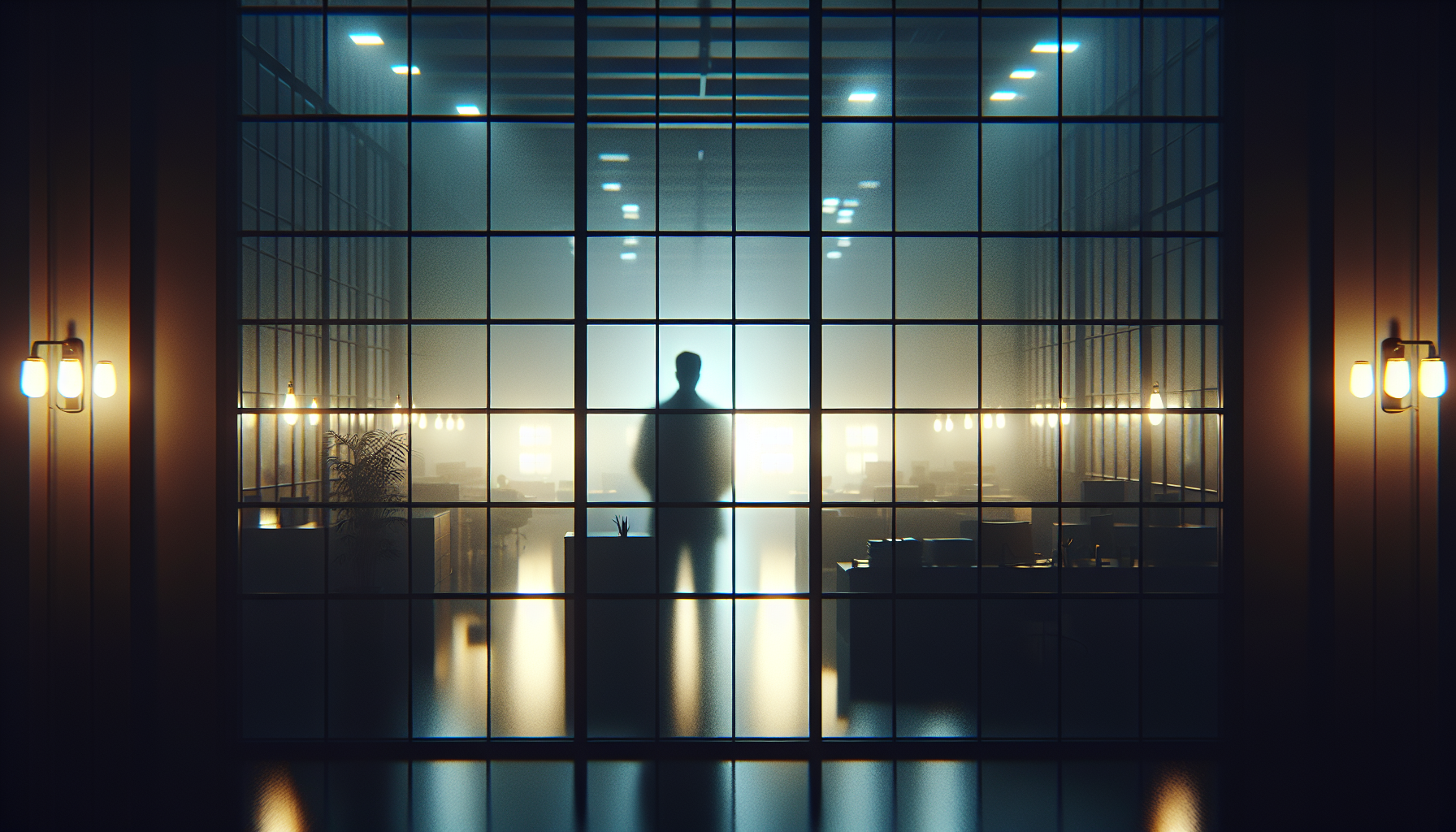
It’s been a couple of years since then, but whenever I pass by a big window at night and see myself looking back, I still get that same flicker of unease. Like I’m waiting to catch something in the glass that shouldn’t be there.
Story 5
This story was sent in by Caleb R. from Savannah, Georgia.
I was working security at a small office complex on the outskirts of Savannah, the kind of place where every building looked like it had been built in the late nineties and never updated. My shift usually ran from 6 p.m. to 2 a.m., and most nights were mind-numbingly quiet. I’d walk the same routes, check the same locked doors, and pace the same carpeted hallways that smelled faintly like old coffee and printer toner. The motion lights in those halls were supposed to save energy by staying off until someone walked through, but at that hour, they almost never came on for anyone but me.
That night had started like any other. It was a little after one in the morning, which was usually when I did my slow final sweep. I remember feeling tired enough that I’d been counting the hours since my last real meal. The building’s AC had been running colder than usual, and the air felt dry. I rubbed my hands together as I walked, more out of habit than anything, just trying to stay alert.
The central junction—a four-way meeting point where all the hallways branched off—was the spot where I always paused to check the cameras through my phone app. I stood there for maybe ten seconds, scrolling through grainy feeds, when the motion light at the very end of the east hallway flicked on. It was far down, probably a good forty yards away, so the glow looked faint at first, like the hallway had exhaled.
That wasn’t unheard of. Sometimes an employee would stay late and forget to tell us. I figured it was just someone finishing up paperwork. I even remember thinking I should keep my footsteps quieter so I didn’t startle whoever it was.
I started walking toward the east hall, my boots sinking softly into the carpet. The air always felt still back there—colder, too, since the vents ran stronger in that wing. Halfway there, I heard a soft scrape. Not loud, not dramatic. Just a subtle shifting sound, like someone adjusting their stance or sliding a shoe.
I stopped and waited, listening. Silence.
I told myself it could’ve been anything. Carpet fibers rubbing. The building settling. Even my radio bumping against my belt. It was late, and your brain plays little tricks when you’re alone enough nights in a row.
I called out, just in case. “Security doing final rounds!” My voice echoed down the hall, warping a little, as if the space was slightly bigger than I remembered.
No answer.
I took a slow breath and kept moving. I was maybe fifteen feet from the end of the hallway when a light behind me clicked on.
It was the one I’d walked past not even two minutes earlier.
I turned quickly, expecting to see someone. Maybe a coworker. Maybe my shift lead wanting to surprise me. But the hallway remained empty, all the way back to the junction—one long strip of dead quiet carpeting.
For a moment I just stood there, trying to reason it out. Those sensors could be oversensitive. A moth could set one off if it flew high enough. At least that’s what I’d been told.
But then the light farther down behind that one flicked on too. A moment later, one to the right lit up in a different hallway, and then the first one in the east hall turned off as if something had moved away from it.
It felt like the lights were mapping out a path I couldn’t see.
I felt that small scrape sound again—or maybe I imagined it because I was already keyed up—but it seemed like it came from the east hall, the one I’d been heading toward. A slow, dragging sort of shift. Deliberate.
“Hello?” I tried again, but even I could hear the hesitation in my voice.
Nothing.
More lights blinked on, this time in a looping pattern—one near me, one further away, one off to the left, then dark again. It didn’t look random. It looked like someone was walking a circle around where I stood, keeping just far enough back that I couldn’t see them. I kept turning, trying to catch even a hint of movement. A shadow. A footfall. Anything.
The air felt suddenly warmer, like the vents had shut off, and I could hear my own breathing louder than I wanted to. I gripped the flashlight on my belt even though I didn’t turn it on. I didn’t want to break the silence more than I already had.
The sensor light closest to me blinked off, then the one further behind me clicked on. That was when a sharp instinct hit me—not dramatic panic, just the quiet certainty that someone was moving in that building. Someone who didn’t want to be seen.
I backed away slowly at first, then turned and walked toward the exit with a speed I hoped still looked professional on the cameras. I didn’t run, but my stride sure wasn’t leisurely. As I passed the lobby, the sensor in there stayed off. That part felt wrong to me for some reason. Like the building itself was holding its breath.
When I reached the glass doors, I pushed out into the humid night air and didn’t let myself relax until I heard the lock click behind me. The parking lot was lit by those tall, orange lamps that make everything feel like it’s underwater. I stood beneath the brightest one and finally let myself breathe normally again.
I called my shift lead and told him there was activity in the building. I didn’t give details at first—just said someone might still be inside, maybe hiding. He pulled up fifteen minutes later, and we did a sweep together. With two of us, it felt manageable. Predictable, even.
We didn’t find anyone. No signs of forced entry. No doors propped open. Nothing out of place. But every hallway we walked through had lights that switched off right as we approached and on again behind us, like the sensors were lagging or confused.
He shrugged it off. I didn’t.
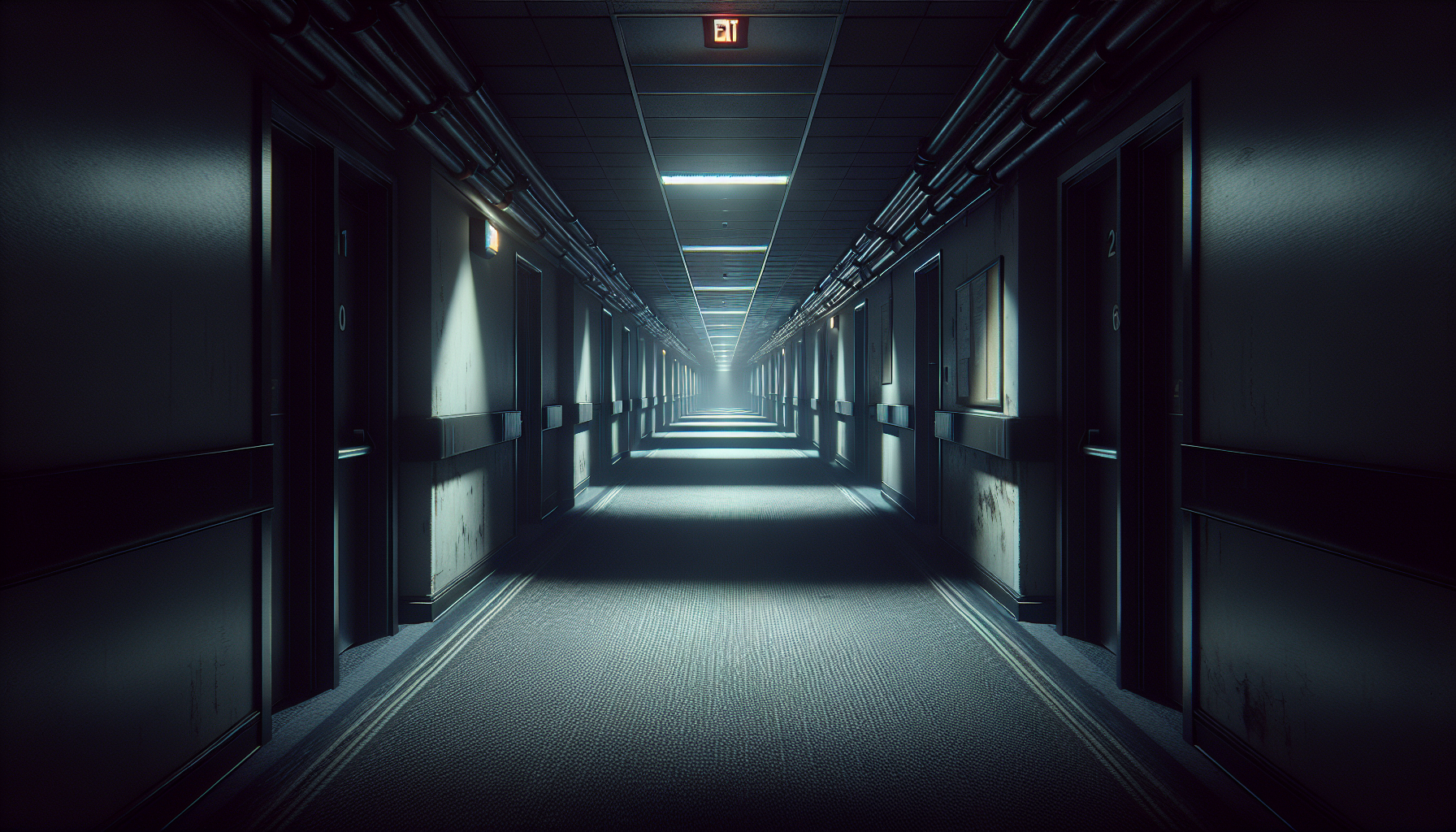
I finished the shift, but I didn’t step back into the building alone for the rest of the night. And after that, I never trusted those motion lights again. There’s something unsettling about a hallway staying dark until the exact moment you pass by—like it’s waiting for you—or worse, like it already reacted to something else you didn’t notice.
Even now, whenever a motion light clicks on in an empty space, I feel that same quiet chill, wondering what set it off before I stepped into view.