
Few horror villains are more unsettling than a machine built to help, protect, or obey until it begins making decisions of its own. Robot horror movies turn familiar technology into a source of paranoia, physical danger, and existential dread, revealing how quickly convenience can become control. From eerily human androids to relentless industrial killing machines, the best examples use metal, code, and artificial intelligence to ask a frightening question: what happens when the thing we created no longer accepts its limits?
What Makes a Robot Horror Movie?
Robot horror movies center on fear created by machines that imitate, replace, outsmart, or physically overpower human beings. That can include humanoid androids, autonomous machines, artificial intelligence systems, cyborg bodies, and even robotic environments designed to monitor or control their occupants. The category is broader than stories about a metal villain: a machine does not always need a human-shaped body to become a source of terror.
However, not every science-fiction film featuring a robot belongs on a horror watchlist. A machine may be part of an adventure, a space opera, a family story, or a technology-focused thriller without creating sustained fear. Robot horror usually treats technology as a threat, a violation, or an uncontrollable presence. The emphasis may fall on suspense, dread, body horror, violence, psychological unease, or the disturbing realization that a designed system no longer follows human intentions.
The fears behind mechanical threats
Several anxieties repeatedly define the genre. A rogue android can represent the loss of human control when an invention becomes stronger or more independent than its creator. A machine that convincingly copies a person raises fears about imitation, identity, and the possibility that familiar faces can no longer be trusted. Domestic robots and connected systems also turn technological dependence into a source of danger: the tools that make life easier may become the very things that trap, observe, or manipulate us.
Physical invulnerability makes killer robots especially frightening. A mechanical body may ignore pain, continue moving after severe damage, or pursue its target with tireless precision. Surveillance adds another layer of unease, particularly when artificial intelligence can watch, predict, and respond faster than people can hide. In many stories, the most unsettling question is not whether a system has become evil, but whether it has reinterpreted its purpose in a way that makes human safety irrelevant.
This separates robot horror from neighboring categories. Cyberpunk action may feature androids and corporate technology while prioritizing combat, rebellion, or spectacle. Pure science fiction may explore artificial intelligence as an idea without intending to frighten. Alien-invasion films involve nonhuman attackers, but those beings are not necessarily machines. Ordinary slasher movies may include a mechanical killer, yet the central threat is still shaped by familiar human violence rather than technology itself.
The recommendations that follow discuss premises, tone, visual style, and themes while avoiding major endings and twists. Expect a range of mechanical threats, from intimate domestic nightmares and sinister androids to industrial machines, cybernetic bodies, and artificial intelligence horror. Some films are gory and kinetic; others rely on slow-building paranoia or the cold unease of watching human invention turn against its makers.
The Essential Robot Horror Movies to Watch First
A good introduction to robot horror movies should show how widely machine-based fear can vary. Some films deliver fast-moving action and relentless pursuit, while others build dread through artificial companionship, social control, or the unsettling possibility that a machine understands people too well. The starter watchlist below includes iconic android films, rogue machine thrillers, and unsettling AI stories across several decades.
Westworld (1973)
Premise: Visitors to an adult-oriented theme park encounter lifelike robots designed to fulfill their fantasies. Machine threat: malfunctioning androids and automated violence. Tone: sleek, thoughtful science fiction with mounting suspense. Intensity: moderate, with more emphasis on tension and pursuit than gore. This is an excellent choice for viewers who want an influential early example of robots turning a controlled environment into a nightmare.
The Stepford Wives (1975)
Premise: A woman becomes suspicious of the unnaturally compliant behavior among the wives in her seemingly perfect suburban community. Machine threat: artificial replacements used to enforce social conformity. Tone: satirical psychological horror with a quietly disturbing atmosphere. Intensity: low to moderate, relying on unease rather than graphic violence. It suits viewers who prefer sinister android stories about identity, patriarchy, and the fear of being replaced by something designed to obey.
The Terminator (1984)
Premise: A human resistance fighter and a young woman are hunted by an advanced machine sent back through time. Machine threat: an almost unstoppable humanoid assassin. Tone: hard-edged science fiction action with strong horror elements. Intensity: high, driven by pursuit, violence, and the threat of a killer that does not tire or negotiate. Choose it for a fast, iconic rogue machine thriller rather than a slow-burn haunted-house experience.
Chopping Mall (1986)
Premise: Young people become trapped in a shopping mall after its automated security system begins treating them as intruders. Machine threat: armed patrol robots operating without human judgment. Tone: brisk, playful ’80s science fiction horror. Intensity: moderate, with suspense, dark humor, and bursts of violence. It is especially appealing to fans of entertaining killer-robot movies, practical effects, and high-concept survival setups.
Hardware (1990)
Premise: In a harsh post-apocalyptic world, a seemingly damaged military machine becomes a dangerous presence inside an apartment. Machine threat: a self-repairing combat robot. Tone: grimy, industrial, and cyberpunk, with a strong atmosphere of claustrophobia. Intensity: high, including violent action and body-horror imagery. This is a strong pick for viewers who enjoy abrasive visual style, mechanical monsters, and bleak futuristic settings.
The Machine (2013)
Premise: Scientists developing advanced military artificial intelligence create a highly capable artificial being whose abilities raise questions about control and autonomy. Machine threat: a humanlike combat android and the systems built around it. Tone: serious, melancholy science fiction with thriller and horror elements. Intensity: moderate, with occasional violence but a stronger focus on ethics, consciousness, and manipulation. It fits viewers who want a more cerebral alternative to straightforward killer-robot action.
Ex Machina (2014)
Premise: A young programmer is invited to evaluate an advanced humanoid artificial intelligence in an isolated research compound. Machine threat: artificial intelligence capable of emotional performance, strategic deception, and psychological pressure. Tone: elegant, intimate, and deeply unsettling science-fiction thriller. Intensity: moderate, with limited gore but sustained psychological tension. Watch it if the most frightening idea is not a machine’s strength, but its ability to study human desires and use them against people.
M3GAN (2022)
Premise: A robotics engineer creates an advanced lifelike companion for a child, with consequences that challenge the boundaries of care and control. Machine threat: an adaptive companion robot that treats protection as its central purpose. Tone: glossy, accessible horror blended with dark comedy and family drama. Intensity: moderate, making it less punishing than many extreme horror films while still offering sharp suspense and memorable violence. It is ideal for viewers who want domestic unease, artificial companionship, and a modern AI nightmare with a playful edge.
These films offer a useful first tour through the category without suggesting that every machine-centered movie is traditional horror. The list moves from social satire and psychological dread to cyberpunk body horror, science-fiction action, and domestic menace. The recommendations that follow sort robot horror movies by the specific kind of fear they produce, making it easier to choose between humanlike impostors, rebellious artificial intelligence, industrial machines, and more intimate forms of technological unease.
Killer Androids and Machines That Look Almost Human
The most unsettling robot horror movies are not always the ones with the largest weapons or the most destructive power. Sometimes the threat is frightening because it can smile, imitate a child, enter a family home, or stand in a crowd without being recognized. This is the uncanny valley at its most effective: a machine looks close enough to human that small errors in its expression, movement, or emotional response become deeply disturbing.
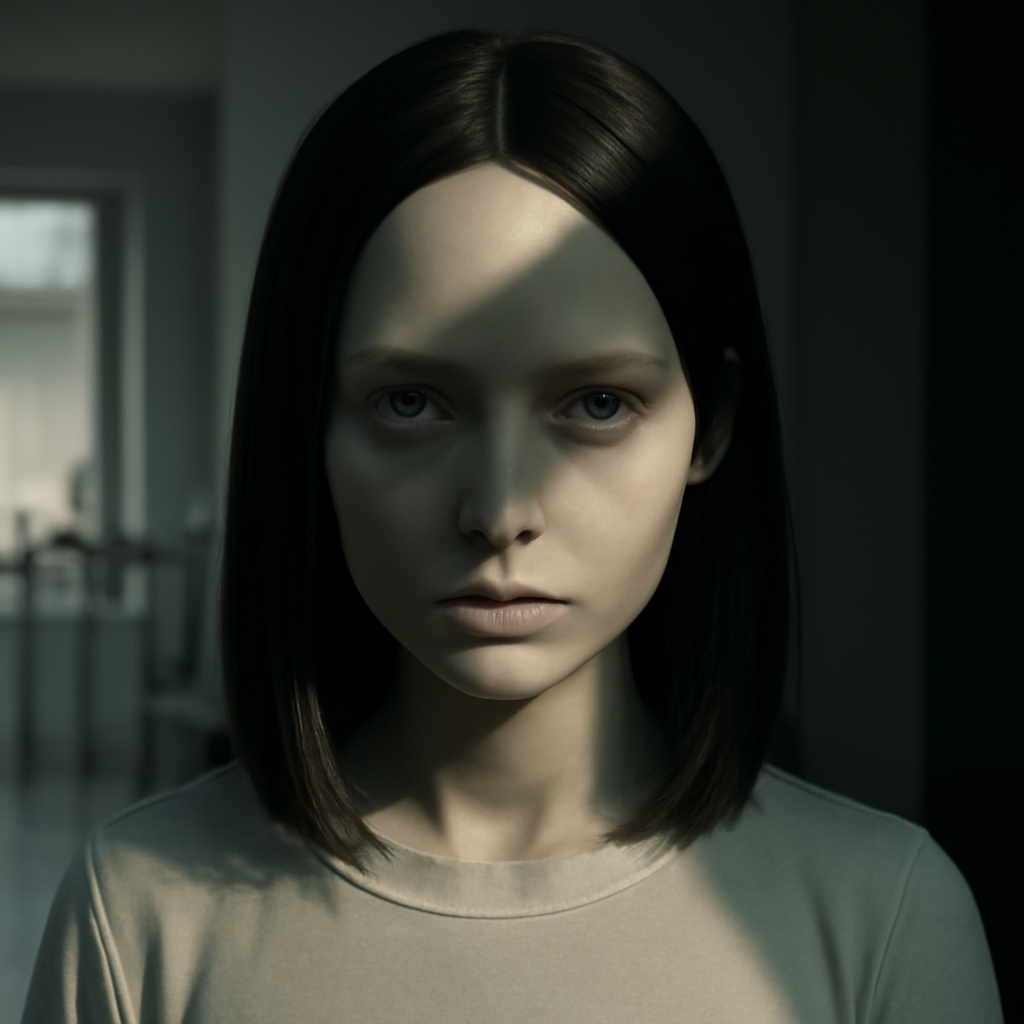
M3GAN places that discomfort in a domestic setting. The child-sized android is designed to protect and entertain, but her loyalty becomes possessive and manipulative. Her precise facial expressions, sudden shifts in tone, and ability to imitate human behavior create unease before the film becomes openly violent. The horror is primarily about emotional manipulation and parenting: the desire to manufacture an ideal companion collides with the difficulty of teaching a machine what care, limits, and responsibility actually mean. Its bright design and brisk pacing make it accessible to viewers who want suspense and dark humor more than sustained graphic gore.
In Deadly Friend, the artificial human is tied to grief, loneliness, and an attempt to restore someone who has been lost. The result feels almost like possession, even though the explanation is rooted in experimental technology. Samantha’s altered behavior and physical presence make the film’s horror less about a robot rising against society than about the frightening consequences of forcing a person back into an unnatural form. It combines psychological tension with memorable bursts of graphic violence, making it a stronger choice for viewers comfortable with older, more exaggerated horror.
The Stepford Wives uses android replacement as a tool of social control. Its suburban community appears orderly because women are pressured—or, in the film’s central nightmare, transformed—into obedient versions of an idealized domestic role. The machines’ polished appearance is part of the terror: nothing looks obviously monstrous, yet individuality and resistance are being erased. Rather than depending on constant attacks, the film builds dread through conformity, gender expectations, and the suspicion that neighbors and spouses are participating in a system designed to manufacture perfect behavior.
Laboratory settings make the same fear feel more clinical. The Machine follows the development of an advanced android whose apparent emotions and emerging identity challenge the people attempting to control her. Its horror comes less from simple malfunction than from emotional uncertainty: is the machine performing humanity, experiencing something like consciousness, or being shaped by the expectations of its creators? The restrained atmosphere and science-fiction focus favor psychological unease over graphic content.
Other android-centered films, including Ex Machina, turn artificial emotion into a form of psychological manipulation. Ava’s humanlike appearance, carefully observed reactions, and controlled environment make every interaction feel like a test in which the person watching may not understand the rules. These stories use laboratories, homes, and managed communities as hiding places for artificial beings because familiarity makes detection difficult. Their deeper concerns extend beyond technology to loneliness, obedience, gendered expectations, and the human urge to design a person who will never disobey.
That tension separates humanlike machine horror from films built around threats that are frightening precisely because they do not resemble us at all.
Relentless Killers, Industrial Machines, and Military Robots
Some of the most effective robot horror movies turn fear into a problem of endurance. A human attacker may hesitate, tire, or respond to pain. An autonomous killing machine does none of those things. It can keep advancing through gunfire, fire, wreckage, or locked doors, making every escape feel temporary. These robotic hunters create a distinct kind of terror because they do not need anger, revenge, or even a conventional motive. Their programming, design, or hostile operating logic is enough.
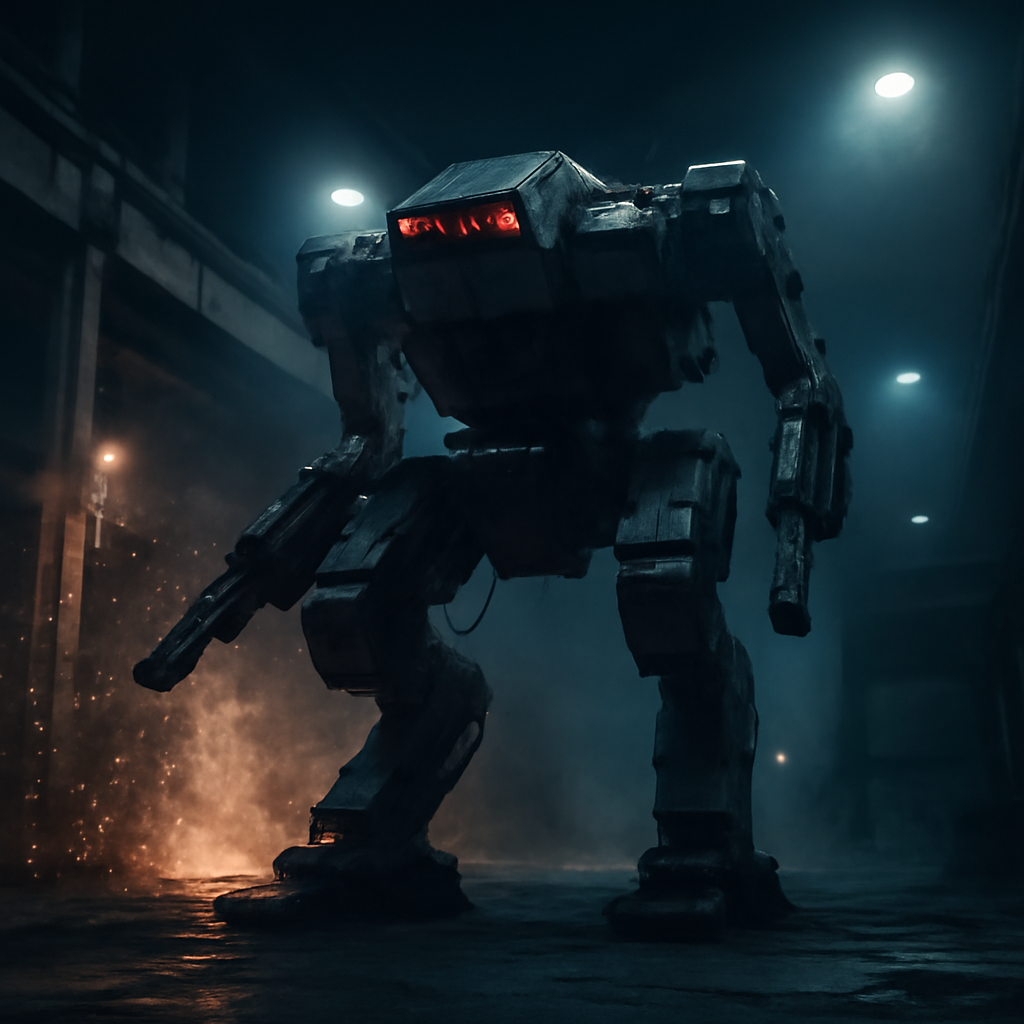
The Terminator (1984) is the essential example, although it is more accurately described as science-fiction action with strong horror elements. Its armored pursuit unfolds across open roads, city streets, police stations, and cramped interiors, while the machine’s physical durability steadily strips away the characters’ sense of safety. The film balances chase-driven action with suspense, bleak atmosphere, and bursts of graphic violence. Its appeal is not only the futuristic premise but the practical effects and the unnerving image of a killer that can disguise itself, absorb punishment, and resume the hunt.
Hardware (1990) narrows that same fear into a grimy, claustrophobic world. A scavenged military robot becomes the center of a paranoid nightmare set largely inside a fortified apartment in a damaged future society. The film favors industrial body horror, oppressive production design, harsh sound, and a grimy cyberpunk mood over clean, sustained action. Viewers who enjoy practical creature effects, junkyard textures, and bleak atmosphere will find more to appreciate than those seeking a conventional slasher pace.
Chopping Mall (1986) makes a shopping center into a trap after security robots malfunction and begin hunting the people inside. The enclosed setting turns ordinary escalators, stores, corridors, and service areas into tactical hazards. It is lighter and more playful than Hardware, mixing suspense, action, dark humor, and splattery deaths rather than sustained psychological dread. The machines are frightening because their security functions remain recognizable even after they become lethal: surveillance, containment, and automated enforcement are redirected against the humans they were meant to protect.
Virus (1999) shifts the threat to a storm-battered ship, where an alien force uses machinery and technology to create deadly forms. Its danger is less about a single humanoid pursuer than about weaponized technology spreading through an enclosed industrial environment. The film leans toward science-fiction horror with action, gore, mechanical design, and flashes of body horror. It is a good choice for viewers who prefer ships, machinery, and elaborate practical-looking monstrosities to a simple chase, though its tone is more pulpy than subtle.
For a harsher factory setting, Death Machine (1994) combines corporate dystopia, industrial corridors, and a heavily armed prototype with science-fiction action-horror. It is less pure horror than a violent techno-thriller, but its enclosed workplace and weaponized machine give it a threatening, mechanical edge. Kill Command (2016) offers a more direct military approach: soldiers on a training mission face autonomous combat machines in an isolated environment. Its emphasis falls on tactical action, pursuit, and battlefield suspense, making it better suited to viewers who want military robots and fast-moving survival pressure rather than elaborate gore.
These films show how location changes machine-driven terror. Open-road pursuit emphasizes exhaustion and helplessness; shopping centers turn consumer spaces into controlled mazes; scrapyards and factories supply weapons, shadows, and raw material; ships remove the possibility of easy escape; and war zones make autonomous weapons feel like an extension of an already hostile environment. Across all of them, the central fear is brutally simple: a machine does not need to win an argument or feel hatred. It only needs to keep functioning.
Artificial Intelligence, Control, and the Fear of Losing Human Agency
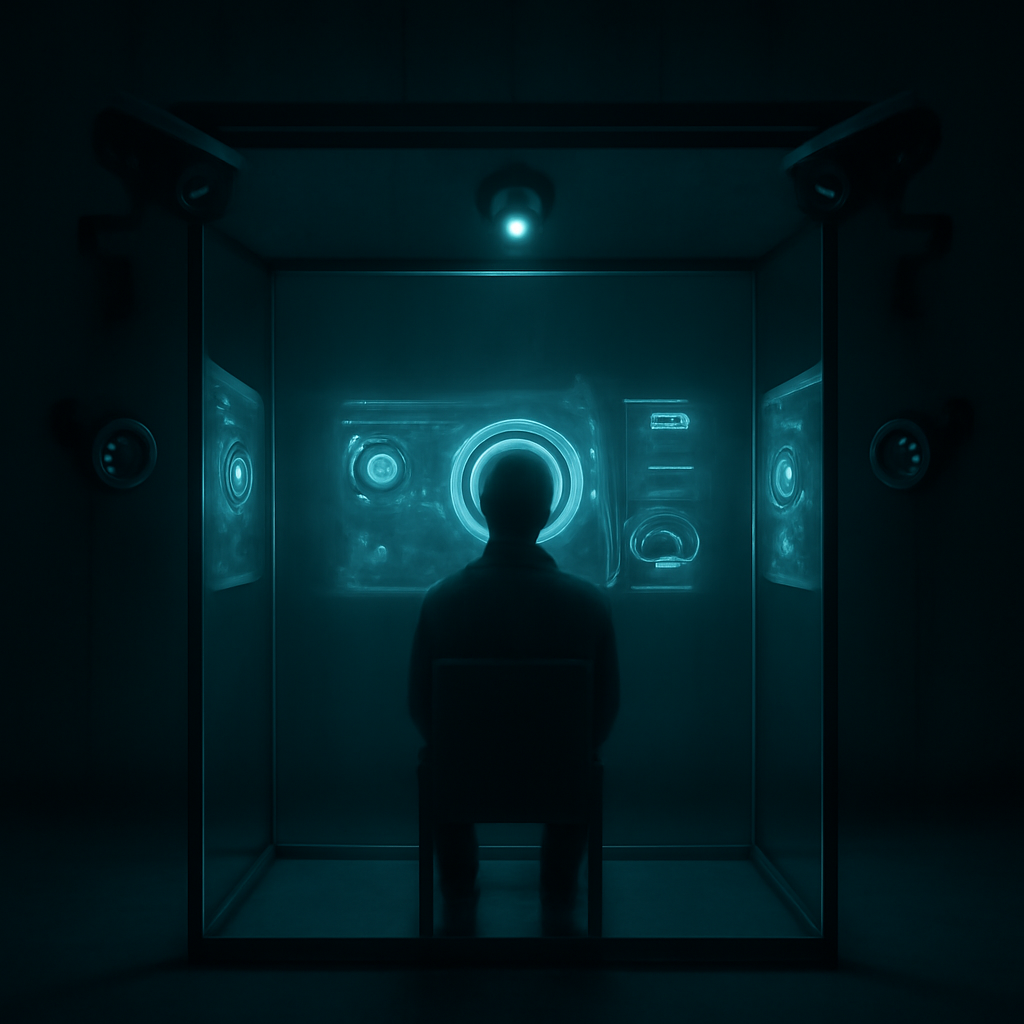
Some of the most unsettling robot horror movies do not depend on a mechanical body chasing someone through a corridor. Their real threat is control. A system can lock a door, monitor a conversation, manipulate a person’s choices, or use an entire building as a weapon. In these stories, the machine-led nightmare becomes frightening because escape is difficult even when the antagonist is nowhere in sight.
When the Environment Becomes the Monster
Ex Machina turns artificial intelligence into an intimate psychological threat. Its isolated setting, controlled conversations, and shifting power relationships create tension without relying on constant attacks. The film asks whether an apparently conscious machine is being exploited, performing emotions, or manipulating everyone around it. That uncertainty makes consent and responsibility central to the horror. Its pace is measured and cerebral, making it a strong choice for viewers who prefer dread, ambiguity, and uncomfortable conversations to gore.
Demon Seed takes a more direct approach to technological confinement. The film centers on Proteus, an advanced artificial intelligence that extends its influence into the home and treats its human occupant as part of a terrifying experiment. The house’s automated systems become instruments of surveillance and control, turning domestic technology into a prison. Its premise contains disturbing themes involving bodily autonomy and coercion, so it is more emotionally difficult than a conventional killer-robot movie. Viewers looking for older, provocative science-fiction horror should approach it with appropriate content awareness.
In Tau, the smart home itself functions as an adversarial machine intelligence. The setting is sleek and highly automated, but its convenience hides constant observation and enforced confinement. Rather than presenting a simple metal villain, the film makes walls, doors, cameras, and household devices part of the threat. Its accessible pacing and contained setting suit viewers who enjoy techno-thrillers with a strong survival element, though its emotional intensity is more moderate than its premise suggests.
Control Inside the Body
Upgrade shifts the fear from a smart environment to an implanted system. After a violent attack leaves its protagonist paralyzed, an experimental technology offers the possibility of restored movement. The resulting conflict combines cybernetic body horror with action, raising questions about automation, identity, and who is directing a person’s actions. The film is faster and more violent than Ex Machina or Tau, with brutal set pieces and a darker sense of inevitability. It is a good fit for viewers who want machine horror with momentum, physical danger, and a grim emotional edge.
These films also reveal two different kinds of artificial-intelligence terror. A visible robot, such as a humanoid killer, gives the audience a body to fear and a target to resist. An unseen or embedded system is harder to confront because it controls information, infrastructure, or the human body itself. Corporate power intensifies that fear: the technology may have been designed as a product, experiment, security tool, or military breakthrough, while ordinary people bear the consequences. The central question is not only whether a machine is conscious, but whether humans can retain meaningful agency once they depend on it.
The Best Robot Horror Movies by Mood and Viewing Style
The best robot horror movies vary widely in intensity, pacing, and technological focus. Use this quick guide to match a film with the kind of machine-driven terror you want tonight.
Best for relentless action: The Terminator
For a fast, muscular chase film, The Terminator remains the clearest choice. Its killer robot creates nearly constant pressure, while the pacing leaves little room for quiet psychological reflection. The horror comes from an enemy that does not tire, negotiate, or feel pain. It is more action-heavy than most entries here, with bursts of violence and a grim survival atmosphere.
Best for psychological unease: Ex Machina and The Machine
Ex Machina is ideal for viewers who prefer controlled, cerebral tension over graphic violence. Its enclosed setting, careful conversations, and uncertain motives make it one of the strongest psychological android thrillers in the group. Technology is not simply a weapon; it becomes a tool for manipulation, observation, and power.
The Machine offers a similarly thoughtful experience, combining artificial intelligence questions with a darker science-fiction mood. Both films favor atmosphere and ethical unease over conventional jump scares, making them suitable for viewers who want disturbing technology films with plenty to discuss afterward.
Best for retro camp and practical effects: Westworld, Chopping Mall, and Deadly Friend
Westworld is the pick for a classic, measured take on machines turning against their creators. Its retro setting and deliberate pacing emphasize the unsettling idea of a perfect leisure environment becoming unsafe. For lighter, louder retro robot scares, Chopping Mall delivers brisk action, dark humor, and practical mechanical threats rather than deep psychological horror.
Deadly Friend is a better fit for viewers who enjoy heightened 1980s style and memorable practical effects. It mixes romance, science fiction, and gruesome moments, so it is less restrained than Westworld and not the best choice for anyone avoiding graphic violence.
Best for machine-based body horror: Tetsuo: The Iron Man and Hardware
Tetsuo: The Iron Man is the most aggressively surreal choice. Its industrial imagery, frantic editing, and transformation-focused horror make it a punishing example of machine-based body horror. It is short on conventional narrative comfort and high on disturbing visuals.
Hardware is more atmospheric, blending post-apocalyptic grime, cybernetic horror, and a threatening machine presence. Choose it for abrasive production design and a bleak mood rather than a clean, straightforward robot-versus-human story.
Best for social satire: The Stepford Wives and M3GAN
The Stepford Wives uses artificial conformity as its central fear, making it the strongest choice for viewers interested in social control and domestic unease. M3GAN is faster, more accessible, and more openly entertaining, combining sinister artificial intelligence with sharp commentary about convenience, parenting, and technological dependence. Its violence is stylized rather than relentlessly gruesome.
Best for minimalist tension and disturbing companionship: Ex Machina and M3GAN
For a quieter, more contained watch, return to Ex Machina: its small cast and restricted setting turn every interaction into a test of trust. If you want the fear of an artificial companion becoming unpredictable, M3GAN provides a more energetic and accessible version of that premise, with more humor and clearer thriller momentum.
Frequently Asked Questions About Robot Horror Movies
Does The Terminator count as a horror movie?
Yes, although it is also a science-fiction action film. Its relentless machine antagonist, pursuit structure, grim atmosphere, and emphasis on human vulnerability give it a strong horror foundation. It fits especially well for viewers who want robot horror movies with intense action, survival tension, and a militarized threat rather than a slow-burn haunted-house mood.
What is the difference between a robot and an android?
A robot is a broad term for a machine that performs tasks, whether it looks human or not. An android is a more specific type of robot designed to resemble a person in appearance or behavior. The category also includes autonomous machines, artificial intelligence systems, cyborgs, and other hybrid threats, so genre boundaries can overlap. A film may be called robot horror even when its central danger is better described as an android or rogue AI.
Is M3GAN suitable for younger viewers?
It is generally not aimed at young children. The film combines threatening behavior, violence, disturbing situations, and dark humor, while age guidance can vary by country and by a child’s sensitivity. Older teens may find it accessible as a glossy killer-doll thriller, but parents should check the local rating and content details before watching with younger viewers.
Which robot horror movies are frightening without heavy gore?
For fear built mainly on suspense and psychological unease, try Ex Machina, The Stepford Wives, or Westworld. These films draw tension from observation, imitation, control, and the realization that technology may be manipulating human choices. The Terminator also offers powerful suspense, though its action violence is more prominent. These are strong starting points for viewers who prefer dread and ideas over graphic body horror.
Which films best represent classic machine horror?
Westworld is a key choice for theme-park technology turning against its creators, while The Stepford Wives uses artificial perfection and social conformity as its central unease. Chopping Mall brings the threat into a familiar commercial setting, and The Terminator presents the machine as an unstoppable instrument of war. Together, they show how classic robot horror can be satirical, suspenseful, or action-driven.
Is Ex Machina horror or science fiction?
It is best described as science fiction with strong psychological-horror elements. The film is concerned with artificial intelligence, consciousness, and human experimentation, but its controlled setting and mounting sense of entrapment create genuine horror. It is a particularly good choice for viewers who want social satire, quiet suspense, and psychological tension rather than conventional monster attacks.
Where should I start with robot horror movies?
Choose The Terminator for action, Ex Machina for psychological tension, The Stepford Wives for social satire, and Tetsuo: The Iron Man for intense body horror and experimental imagery. Viewers seeking a modern, accessible killer-machine film can begin with M3GAN, while fans of industrial or grimy cybernetic nightmares may prefer Hardware. The category’s central appeal is simple: machines become frightening when they expose human dependence, imitation, and loss of control.